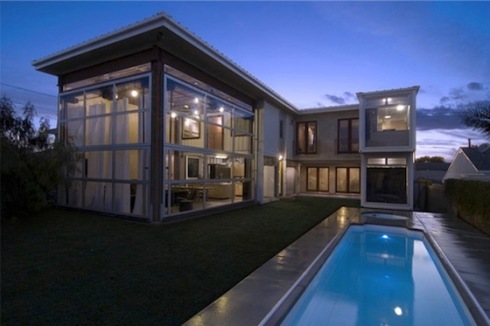
Build a Solid Steel Cabin on Steroids that you can HAUL to your site!

20 May

There are “boxes” and then… there are “BOXES”.

We’ve all seen the “soft-sided” pop out boxes that are getting plastered everywhere from “Fresno to Facebook”. It’s a large RV “towable” that folds out to form a big “hardened tent”.

Accordian Cabin Concept for ISBU Conversion

Here at RR (and over at CHC – our business site) We’ve done similar things with 20′ ISBUs for guys who wanted to drop boxes on the beach or in the mountains for three-season holiday tours. They were  never meant to be used in difficult (hard winter) environments.

But what do you do when you need a “FOUR Season” solution?

Canvas or plastic just doesn’t cut it.

IN the ISBU realm, there are boxes called “Rapid Deployment” modules. These are used to create habitable areas that can be transported by truck and then dropped and popped… open.

Some of these boxes actually SLIDE open, allowing more space to be created in a fashion similar to those RVs we see passing us on the highway, hellbent for the nearest Good Sam’s Campground.

Using this “expansion method”, you could turn a 20′ High Cube single width box into a 24′x20′x8’6″ cabin shelter.

The Military uses similar boxes to build structures. There are a lot of reasons WHY they do it;

It’s an easily transported structure.

It’s light enough to be maneuvered into position using farm equipment.

It’s not “rocket science”. You can actually use simple diagrams to show how it all unfolds. This is particularly useful when you’re dealing with “natives” who don’t speak your language.

It sets up in MOMENTS. You deliver it to your site, drop it onto some kind of foundation (be it blocks, pilings, or a slab) and then you level it out and pop it open. About a half hour later (if you’ve NEVER done it before)… You’re ready to start moving furniture and people into that new “Corten Clad” space.

In “our” world, many families and groups want units that they can truck to site, set up and inhabit in a matter of hours. When they leave, they want to be able to secure those units from “Mother Nature or miscreant”. In most cases, these boxes are intended to be transported up into the mountains or someplace “rural” where they’ll stand against whatever comes.

And, they want to be able to “MOVE them to another location” if need be or danger arises”.

In most applications, these boxes are meant for arid or tropical deployment.

You can see by the video that the fold-out walls are quite “thin”. Even if you insulated them with SPF, you’d  only get an R-value of about R15 (not inclusive of any openings you cut in the walls, which would further reduce “R-values”).

We can do better. And, we can do it without having to somehow find these “Rapid Deployment” boxes sitting on Craigslist. Folks, that’s not going to happen.

We need something with a little bit more performance. We need to be able to deploy boxes that can travel from “Atlanta to Antarctica” without encroachment.

Okay, we’re not really going to build boxes (or box systems) that will stand up to “Antarctic” weather, but we’ll easily meet and exceed the requirements for structures dropped into places like Northern Montana or “upper Canada”.

Here at RR/CHC, we’re working on a new “addition” to some of our boxes. We’re building a “side frame” that welds onto each long side, that incorporates the bi-folds required to duplicate this in “harsh weather”.

We even incorporate the twistlocks to tie this system together.

An integral winch system will allow you to move the top and bottom segments out safely, with the push of a button. Think “truck winch and a PV charged deep cycle truck battery.”

In our view, the system has to be deployable by anyone in your party capable of  being tasked with this responsibility. I’m talking a pair of men, women or teenaged children.

Because all of your “mech and tech” (bath/galley/etc) are already installed in the interior of the existing (uncompromised) ISBU -shipping container, all you’ll do is drop the sides and then move the stacked furniture out into the created open areas to set up house! Heck, it’s easier than making a “Butterbar” look like an imbecile! :)

You can see how simple this is.

The trick is keeping the boxes narrow enough to allow them to be trailered to your Cabin or BOL (Bug Out Location) site behind a truck. There IS a way to do that. No, we’re not going to describe it. We have to keep some of this to ourselves… LOL!

Add a PV array to the roof for power and a reinforced area built into that roof for water bladders for domestic hot water (gravity assisted, no less) and you’re off-grid in style.

Add a pop-up to the top of the original High Cube ISBU and you have a “Penthouse” sleeping area above the din of the road…

Drop this unit onto a heavy chassis equipped with twistlocks (like maybe a modified Unimog chassis), add some leveler legs with ground plates to it  and you have the ultimate BOV.

xm1087
Think “M-934ish 5 Ton Expando Vans”… ;)

m1087

OR… drop one of these incredible units on TOP of another 20′ High Cube and you have a “High Ground Home” with a place to park your BOV underneath!

(Yes, it’s do-able. You can stack a pair of 20′ High Cube boxes with a pair of bucket tractors. It’s tricky, but we do it all the time.) :)

We’ve got some really cool things in store. Watch and learn, Pilgrims.

Stay tuned.

RR Avatar
This is such a great idea that we’ve already paid patent atty’s and copyright guys to protect it. So, no funny business, folks! :)

Help! I think I’m RIGID!

17 May

We’re out trying to beat ourselves to death (with all the travel, incredibly long hours and almost endless long lists of things that MUST be accomplished as “Spring” roars to life) , so I’m going to take a moment or two over the next few posts to answer question from readers;

One of our readers asks;

Hey Ronin,

I’m building a small cabin on Sonotube pilings out of a pair of 20′ High Cube ISBUs. This is seriously right out of your playbook. We got the idea after reading your book. After consulting with you on the phone, our road to “Corten Cabin-life” was paved!

(Editor’s note; He’s talking about “Introduction to Container Homes and Buildings” and you can find about it in the right-hand sidebar of your screen.)

We’re doing this in the mountains of Wyoming, not terribly far from where you hail from. Would that we could afford to live in the Bitterroots! It’s so beautiful there! We’re envious! :)

We need to insulate in a big way. Lots of snow and cold in the winters, which seems to drag on into early summer. I know you can understand this, as you’re  getting “frozen” similarly. We want to insulate on the >OUTSIDE< just like you teach, and we’ll cover it with a siding product that looks amazingly like a log home after it’s applied.

Like you suggested, we’re using SIPs (Structural Insulated Panels) to construct our Gable Roof.

Boy, were the SIPs expensive! I know that the lack of support trusses and the ease of installation will help pay them down, but I had to sleep on the couch for a week after that argument with the Mrs… :(

In the rest of the cabin, we want to use SPF (Spray Foam Insulation), we really do, but it’s just not in our budget. They want over a $1 a square foot, in 1 inch thicknesses. We figure that we need at least 3″ of closed cell foam in the walls and over double that in the floor.

The insulation contractor told us that he’d “give us a deal” and then he quoted us $4,300.00 if we paid him in cash. I nearly fell down.  My wife uttered a curse word and left the room.

(Fir the record – that SPF quote included 3″ in the walls and 8″ in the floor.)

I’m glad that we’d already purchased the containers and the SIPs, or we wouldn’t be building this cabin now. My wife is pretty hacked off.

(Boy, were the SIPs expensive! I know that the lack of trusses and the ease of installation will help pay them down, but I had to sleep on the couch for a week after that argument with the Mrs…) :(

We want to heat the cabin with a small woodstove very efficiently.  So, insulation and glazing are really important.

Help us, oh “Sage of Steel”! We need help, before winter reappears!

Signed,

Frozen in Frostbite Falls, Wyoming

****

Dear “Frostbitten”,

First, love the Rocky and Bullwinkle reference! I thought of Boris and Natasha immediately. :)

boris and natasha

(When reading this out loud at home, my 5 year old son yelled out “Better Frostbit than SNAKE bit!” as he raced giggling out of my room…)

Second, in a cold climate, a high performance building is REALLY important, especially when you’re dependent on cordwood for heating.

SIPs really are the best way to go, in my opinion, when building a roof. When SIPs are topped with Standing Seam Metal Roofing (SSMR) it’s a combination that is really hard to beat. And, once installed, you won’t touch that roof again for decades! :)

Now, about your insulation dilemma;

Usually, around here when you hear about “spray foam”, people are talking about this;

Firefighters_spray_foamWildfires in these parts make people REALLY nervous. If you follow the blog,  you know that we actually abandoned a house last year as the wildfires in the canyons closed in on us.

But we’re talking about Closed Cell-  Spray Foam insulation. It’s one of our favorite things around here. It’s an insulation that is really high performance and it fills in all the nooks and crannies where moisture and air can leak in and out of your home. It also grants you a vapor barrier a AND a moisture barrier, all at the same time.  It’s just goodness, I tell you what.

But, all that goodness doesn’t come without a price.

It’s true that  SPF is pricey. It can be had for less than you were quoted if you shop hard, but in some locales, there just isn’t any room for bargaining. The insulation guy is probably one of a small handful in your region and he knows that he’s got you over a barrel.

sprayfoam installation
Let’s go back to “the Playbook” (Intro to Container Homes and Buildings).

I PREACH the dogma of recycling, repurposing and reusing. I do it all the time. You know it and I know it, so I won’t preach that sermon again here, except to say this;

I know where you are located and actually, I have not only a plan, but a source for you.

“Run… Do not WALK… to Repurposed Materials in Denver, CO.”

10220 Brighton Rd Unit #7 Henderson, CO 80640

(Technically, it’s just NE Denver. Same same…) ;)

Here’s their telephone number so you can call for directions. 303-321-1471

I DO like these guys (with this caveat); “These guys don’t always have the greatest stuff, or even the best prices, but this time… they have you covered… literally.”

They are within easy striking distance of your cabin. They currently have “bunks” (in 12 sheet quantities equaling 384 square feet of coverage) of reclaimed 3.5″ and 4″ Polyiso (ISO) foam sheeting for sale. My understanding is that the rigid insulation is coming out of a Casino Remodel in Las Vegas.”

You want the ISO boards. PolyIso is the best Rigid Insulation you can buy, as far as performance goes. You’re  going to see r-values of r6 to r6.8 per inch, easy. You need “high performance”. So, it’s ISO that you need. And you need several inches of it on your walls and double that in the floor.

rigid-insulation

A lot of this rigid insulation will have a foil side, to allow the creation of a radiant barrier.

We find a lot of this material on Craigslist and Freecycle, but in this case, it’s a “one stop shopping trip” for your guys.

(Seriously, we find recyclable rigid all the time, for almost nothing in comparison with either buying it new or shooting SPF on your walls.)

The last time I checked, the RM guys in CO had bunks of rigid insulation for sale for under $260 – $300 per bunk. In the 3.5″ thickness ($21.66 per 4×8 sheet), that works out to about $.70 per square foot for an r-value of R21+  and just a bit more for the 4″ sheets. Those 4″ sheets (at $25 a sheet) will get you pretty close to r26 for far less ($.80 per square foot) than you were quoted for SPF from that contractor! And remember that it’s in the FULL thicknesses required.

Once you get it home;

You’re going to apply it using construction adhesive, between furring strips that you apply to the outside of the container. You’ll fill the seams using SPF tubes out of a spray can  type applicator to keep it all tight. You can easily do this yourself  and the sheets are light enough that just about anyone can handle them with ease. That means your “idiot brother in law” (Stop it! We ALL have an “idiot bro in law” or a reasonable facsimile thereof)  can help without complaining that the work is JUST TOO HARD for him… ;)

You can DO this… for about $1200 worth of recycled ISO insulation, a “travel day” and some sweat equity.  You’re going to have some extra sheets, because RM doesn’t sell PolyISO by the sheet. You DO have to purchase the entire bunk.

BUT, you can use that extra insulation somewhere else in your home. I’d use it in partition walls like in the bathroom area, to not only help control heat, but for it’s acoustic properties.

“$1200.00. Done. Finito. Pass me a beer.”

Hmmm… your quotes for  “Contractor Applied – SPF” were  almost 4 times that amount! And you’re being “green” by recycling insulation! Good for YOU!

That’s EVEN better for your wallet!

NOW you can afford high-performance windows! :)

(I’ll see if I can find you a good source nearby. Stay tuned for that.)

So go on! Git! That “ISO board bunkage” ain’t gonna be there long!

Happy hunting!

And we just saved you over $3000 on insulation. Go take your wife out to a nice dinner in Denver.

Are you still here? GO. NOW.

Stay tuned,

RR AvatarRelated articles

Apocalypse Duplexes, Inc.

15 May

I recently received an email from a guy who buys up old industrial and warehouse districts, in Australia.

He sent me an email and a “sample” photo of a single (standalone) house he saw and he wondered if we could take ISBUs and then turn them into rows of low income duplexes, to blend into an “Urban Industrial Chic” neighborhood in a similar fashion.  He actually wants to build ISBU housing on top of existing parking decks. The only real restriction is that we can’t go higher than two boxes high.

And, I have to say… the budget is pretty tight. Remember, he’s not looking to build luxury units, he’s aiming for the low-income market. So, we’re going to keep it really simple.

We’ve done “Artist” and “Vendor” units before that had a retail or gallery area on the first floor, with a staircase up to an apartment or residence.This is just another spin on that idea.

This is one version of what we think he might be looking for.

ISBU Duplex Concept for warehouse districtWould you live in this?

You know… the more I look at this…  “bronzed glass” might look really cool. I might have to respin this… LOL!

RR Avatar

Recycled Respites

13 May

Here on RR, we talk a LOT about using “found” materials.

This leads to an email folder full of hate mail from irate housing pros (who also whine that we’re “UnAmerican” for “stealing jobs from them”), who claim that we’re teaching you to use garbage to build structure.

Bull. We’ve NEVER advised anyone to use “junk” to build with. We don’t teach people to build “hovels”. We teach them to build, strong,  sustainable, AFFORDABLE homes.

What we HAVE advised you to do is to find innovative ways to use materials (within specification and purpose, of course) to lower your building or even (gasp!) furnishing costs.

These same guys will tell you that you can’t really build “anything” for under $150 a square foot.

We usually suggest that they double up on their meds and read more. Maybe they’ll learn something.

Do we collect and use materials like “scrap” rigid insulation in our builds? You bet.

“Rigid” performs extremely well. You can find it in dumpsters at commercial build sites all the time. Ask a contractor or “yard  boss” and they may just let you haul it off. It gets that bulky stuff out of their dumpster so that they have room for more garbage. We see it on Craigslist and Freecycle, all the time. Is using it “labor intensive”? YES. You take large, cast off scrap pieces of foam and then piece them together like a jigsaw puzzle. It takes some forethought to get it right.  But, it costs you SWEAT instead of cash. The benefit is that you get a high performance insulation package out of the deal.

But you can find gems in (actually UNDER) the stuff that gets delivered to your building site as well;

palletbedThis is a bed that you could build in a few hours, tops.

Some thoughts;

  1. Sand the pallets (edges) to make them less prone to snagging your sheets or shins.
  2. Nail pallets together to keep them from moving once you’ve established your “pattern”.
  3. Use recycled LED Christmas Tree lights to illuminate under the bed. Low power and low heat.
  4. Remember that beds aren’t just for “sleeping”. If you’re in a relationship (or you are building this for a child)  consider putting a box springs under the mattress, to help “fortify” the bed system.

And then, have fun with it. While your neighbors are spending boatloads on high priced furnishings, you’ll have cash left over for “family nights”. :)

RR Avatar


Make your neighbors GREEN… with envy.

10 May Beds-in-20s

Build smart, build green.

It makes sense that many who want to build an ISBU home want to make that home as eco-friendly as they possibly can.

After all, most of us are reducing our footprints, so we might as well make that home as green and efficient as possible, right?

What can you do to accomplish that when building YOUR very own ISBU home?

Here are a list of options that can help:

Use recycled materials.

I preach this like a never-ending sermon. Many, many families have discovered that places like Craigslist or Freecycle can be a great resource for finding just about any material or fixture that you might need for your home build.

Beyond the normal stuff – doors, windows, lumber, etc…

I’ve found trailers full of rigid insulation. I’ve found storage rooms full of hurricane doors. I’ve found glu-lam beams and much more…

I’ve sourced waste lumber and even insulation from construction sites. You’d be surprised at what you can build with scrap lumber;

Scrap Lumber Furniture

All you have to do is ask. The worst thing they can say is NO.

Big Box Stores like Lowes and Home Depot have scrap lumber bins.

You can usually buy that scrap lumber for almost nothing.  It’s not just little tiny bits and pieces. Some of it is well worth “recycling”. You’re not going to buy a whole house worth of lumber this way, bit it’s a great way to find bits and pieces you need for finish work or even decking or foundation work. Again, ASK. All they can say is NO.

Think about your finishes.

Forget toxic chemicals for polishing floors and paneling in exchange for stuff like beeswax.

Hit the forums on-line to look for innovative ways to accomplish tasks.

You will be AMAZED at the cool stuff families share as they help other families achieve their dreams.

And don’t forget the biggest “GREEN” homebuilding boon of all;

Use the SUN!

Solar Hot Water, Photovoltaic Panels, and consider wood gasifiers. If you can weld, you can build some amazing stuff out of scrap steel.

Homebuilt Wood Gasifer
With a little research, you will find not only savings, but increased energy efficiency served up on that same plate!

Stay Tuned.
RR Avatar


Mother’s Day is coming… It made us think…

8 May

This is one of those week’s where you find yourself  thinking about “Mom”.  I mean… Sunday IS quickly approaching.

But for us, this week, It took an “odd turn”. We started thinking about a lot of other people’s MOMS.

Here at RR we support a lot of causes. One of them that is near  and  dear to our hearts is “Breast Cancer”.

We’ve personally lost family members to this terrible disease. Moms, wives, daughters. It’s a river of sadness that never stops flowing. We’ve shed tears over this and that is an understatement.

One of my best friends has a double mastectomy she received because of breast cancer. She has always been an incredibly beautiful woman. She was the textbook “California Beach Girl”. She had “curves for miles” and she was a pleasure to behold.

(Okay, I admit it. Men are more visual than women. We know it, YOU know it, so get over it.) :)

Despite her hardships, she is STILL the most beautiful girl in the room, everywhere she goes.  She may not have “the big  t-shirt” anymore, but she’s still a knock-out. She’s paid her price to stay alive and she’s an inspiration to us all. We adore her.  She reminds us that “beauty” isn’t just based on media hype for “this or that” figure. It’s not just “skin-deep”.  She’s a lioness who wears her scars well and she  keeps moving forward with confidence, helping others by deed and “by example”.

As a result of her impact on our lives, we’ve been involved with groups that focus on helping those afflicted with this disease as much as we possibly can. Many of these organizations are struggling as the economy tightens the purse strings of those with charities in mind.

Working for a “Cure for Breast Cancer” is noble. We’re all for those who push to aid those in need, especially in this cause. When you think of breast cancer, most of us think “pink”. The Susan G. Komen Foundation is a front-runner in making breast cancer visible to the masses.

With walk-a-thons, public events and fund-raisers, The Susan G. Komen Foundation makes a lot of positive noise.

But, like many other charitable organizations, they see their coffers dwindling.

So, like many other families that start thinking about what they have and where they can send it to do the most good… we took a look at what the Komen folks do. We wished that we hadn’t. Truly. We’re sorry that we looked. If you look at the numbers, now we feel like we (and more importantly Breast Cancer victims) are being duped.

2012 may have been a very bad year for the Susan G. Komen Foundation, but you’d never know it by looking at the tax returns for it’s leader. 2012 was a very good year for its CEO, Nancy Brinker. I’m talking about “over the top” good.

Nancy Brinker

Last year, Brinker said, “We are doing everything in our power to ensure that women have access to quality cancer care and the support that they need.” It’s a worthy, necessary goal. In our opinion, Brinker (at the very least) misspoke.

After so much disaster and hardship, it seems the woman who’s benefited most from Komen’s Breast Cancer charity is… um…  Nancy Brinker.

Many of us have read that in 2012, the breast cancer organization ignited a firestorm by announcing it was pulling its funding for breast cancer screenings and services for Planned Parenthood.

As you can imagine, this raised some eyebrows and some ire. Those screenings and services are one of the front-lines of Breast Cancer defense for American women. Komen hastily and ineptly apologized, then backpedaled.

We witnessed Karen Handel, Komen’s “Vice President for Public Policy” resign in the wake of the scandal. The people responded by quietly “defunding” Komen.  They saw registrations for its events decline in places like Maryland and Texas and just about everywhere else.

Komen got put in the “hot seat”.  People found it ironic that an organization that features the words “the cure” so heavily in its promotion and mission, an organization that boasts how its “research investment has changed the breast cancer landscape,” devotes such a minuscule and declining portion of its dollars to actually finding one.

Turns out that in 2011, Komen spent 15 percent of its donations on “finding the cure” – research — not even half of what it did just a few years prior. That’s 15 cents out of every dollar that you donated to them, folks.

And what about Komen’s founder, Nancy Brinker? You remember her, that woman whose vow to the sister she lost to cancer has served as the organization’s poignant, relatable narrative… Well, she stepped down as Komen’s CEO.

Did she “quit” or “give up”? No. She just invented a new role for herself in the organization. While she’s still listed on the records as the CEO of Komen, last August she took on a new role as “chairwoman of the executive committee”.

In short, the whole series of trainwrecks perpetrated by Komen was so offensive and appalling that Deanna Zandt, author of “Share This! How You Will Change the World With Social Networking,” called the Komen fiasco a teachable “example of what not to do.”

Leadership. It’s about leadership. You captain your ship and chart your course, steering clear of obstacles or you end up on the rocks… or do you?

It’s 2013. After more than a year of bad publicity and declining participation in Komen activities and events, Brinker herself seems to be doing just fine.

As Cheryl Hall pointed out this weekend in the Dallas Morning News, Brinker made “$684,717 in fiscal 2012, a 64 percent jump from her $417,000 salary from April 2010 to March 2011.

”That’s a whole lot of green for all that pink.”

Hall notes that’s about twice what the organization’s chief financial officer, Mark Nadolny, or former president Liz Thompson were making.

And as Peggy Orenstein points out on her blog Monday, it’s considerably more than the average nonprofit CEO salary of $132,739. We’re talking about five times the average, folks, for a CEO who has placed her ship firmly on the beach. And, the tide is going out, further grounding her vessel.

Of course, rewarding CEOs even as they’re bombing out is a way of life in America.

Appearently, where Nancy Brinker is concerned, they’re using an entire wing of “Stealth Bombers” to deliver her (in our view) unearned cash.

We ask those at The Susan G. Komen Foundation to think long and hard about how they operate. In our opinion, they’re giving themselves a black eye and doing a huge disservice to the “Breast Cancer” community.

Until they do this, we’re going to focus on “local” missions, helping those close to us, DIRECTLY, instead of giving aid to those who pocket most of the funds for themselves. We’d humbly ask you to do the same…

We may just be “small voices” that get lost in the crowd, but if enough of us do this, we can create a chorus that will drown out these “charitable failures”.

Please listen to your hearts and act accordingly.

I want to thank “our special Breast Cancer Survior who gives us so much, every day” and Mary Elizabeth Williams over at www.salon.com for compelling us to run this.

Stay tuned…

Little Tiny Ideas!

7 May

I bet that you wouldn’t have to look twice to see a 20′ High Cube ISBU built out like this.

HOME!Need a guest room in your backyard?

A private room for your teen?

A place for your Mother-In-Law to stay, so she’s not under foot?

Just do it.

TIP: Click on the image to see in in “Wallpaper” size. It’s really nice! :)

ISBU Homebuilding Part (mumble, grumble, snort): Waste not, want not!

3 May

I’m still surrounded by that accursed white stuff… so;

It’s time for some Green Building Recommendations

I’ll just pretend that it’s “Spring”. I’ve just returned from yet another road trip. During that trip (I’ve covered a few THOUSAND miles in the last few weeks), I had a lot of time to give thought to HOW I’m going to proceed in building my OWN project – a cluster of ISBU structures assembled to look remarkably like (gasp!) a Sustainable FARM operation. :)

20 horse Barn Elevation Concept

I’d call it a ranch, but with all the greenhouses, arboretums, conservatories and fields of hay, if does look more like a farm than a ranch.

We’re building (3) residences, a “guest” dorm, (2) cabins, several barns (beef, dairy, equine and hay storage), shops (both wood and machine), poultry houses (chickens, turkeys and ducks) and various other “dedicated purpose structures” – like aquaponics/hydroponic buildings, for instance.

Granted, a few of the ISBU buildings are just for “enjoyment”…

Can you say “sauna” and “smokehouse”? I knew you could. I may even build a small recording studio. It’d be cool to have my own “media center” to podcast and process Youtube video in! I might even pick up a guitar from time to time!

I just hope I don’t get the sauna and the smokehouse confused when I stumble out that direction in the dark. I don’t want to emerge smelling like hickory and apple chips! That’s a smell that you can’t wash off! ;)

Over the next several days, I’m going to share lists of things to consider with you, as you start planning your new ISBU home.

Many of these considerations can be further explored in my book;

Introduction to Container Homes and Buildings

You can find out more about that by looking to the right side of your monitor (in the sidebar) and clicking on the blue book.

Since all good things start with organization and a plan, let’s start making lists.Show me a man who failed and I’ll show you a man who didn’t have a good plan. And, plans start with (say it with me, campers…) lists.

You can use these lists when building a home, remodeling, or even considering a home for purchase. Yes, I’m a big list maker. Senility demands it! :)

Note that a few items will be repeated because they pertain to several aspects of “green” building.

I have to clear some old derelict structure off my site before I can build. And you all know how much I like to reuse or repurpose materials whenever possible. So instead of just pushing it all up into a pile and setting  fire to it, we’re gonna cull some cool stuff from it, if possible.

Reducing Wood Use

  1. Renovate or remodel existing buildings.
  2. Build small.
  3. Build simply.
  4. Design the home to be built in 2-foot increments.
  5. Build for durability.
  6. Build for adaptability.
  7. Design using optimum value engineering.
  8. Use engineered lumber and wood products.
  9. Use prefabricated trusses and other factory-assembled building components.
  10. Reduce wood waste by recycling and reusing scrap lumber.
  11. Use salvaged and/or reclaimed lumber.
  12. Use alternative materials such as steel, straw bales, and earthen materials.
  13. Use certified wood.

Stay Tuned!

RR Avatar

Does HANES make Plywood underwear?

30 Apr

As we toil against a workload that is as challenging as “Spring’s Arrival” in Montana…

I’m going to reach into the mailbag and see what’s shakin’ in ISBU-land…

Here we go;

Dear Ronin,

We’re building our ISBU cabin in the woods. We’ve set our 20′ ISBUs on concrete pilings we cast from scrap sonotubes, just like you showed us. Steel plates and J-bolts allowed us to weld the boxes to the pilings, just like you specified. After removing most of the interior walls (our largest open span is less than 16′ – reinforced with columns made from 2″ box steel – again like you showed us)) we’ve welded 1/4th inch steel plate along all of the connecting rails (top and bottom), to stiffen things up.

SPF (Closed cell Spray Foam Insulation) followed after we glued in firring strips. We DID insulate inside, as much as you hate that. We WANT people to see the containers outer skin. It’s that “Urban Chic” look! We love it! We went heavier than we planned on the thickness of the insulation, thanks to a generous insulation guy who really dug what we were doing.

Now, we’re staring at SPF and firring strips.  Yuck. According to my wife, it feels like we’re living in a womb painted with vomit. SO, I’m anxious to get the insulation covered up.

You’ve said over and over again that you don’t like drywall (sheetrock).  Sheetrock prices have jumped through the roof here. I need a low cost solution to sheetrock that is also structural enough to hang things like shelves, light fixtures and cabinets.  We have an opportunity to buy 1/2″ MDO plywood sheets at a huge discount. It’s surplus from a big “boatyard” construction job that went bust. Thank you Craigslist! Can we use this? I can’t begin to picture what a “plywood interior” would look like.

We loved all the tricks you shared with us during our consult sessions. We literally saved thousands of dollars (contractors said it was impossible and YOU proved them wrong!) and it made completing this project within our budget possible!

Thank you so much!

Signed,

Naked and exposed

**

Dear Nudist,

First, don’t sell yourselves short. I didn’t prove anything. YOU proved them wrong by starting with a good design and then applying liberal applications of common sense and repurposing. YOUR hard work is making your success possible. I’m just the guy standing behind the curtain. :)

I also told you early on that if a consultant or tradesman can’t save you enough (in the building process) to pay for his/her services, you need to kick them to the curb.

It’s true. I’m not a big fan of sheetrock. It must be all that smelly (rotten egg) Chinese drywall that got dumped in the South after Hurricane Katrina.

But seriously, when you’re building in a steel box, especially one that is clad with SPF, sheetrock just isn’t “necessary”.

Okay – first off, I have to say that using plywood IS more labor intensive and you have to think it through…

It doesn’t cut as fast as Sheetrock and it’s a “two man job” because it’s harder to handle.

We use 1/2″ (15/32 or better)  plywood in place of drywall all the time. MDO (Medium Density Overlay) is even better, for reasons I’ll explain later.

TIP: The best way to use plywood in an interior is to plan it so there are no visible seams that need to be taped. If you can do that, plywood is a joy to behold. If you are going to paint it, add a piece of molding over the seam (to hide it and add some visual interest). If you do it right, it’ll look like expensive “Architectural Paneling” when you’re finished, for about half the cost of cheap decorator panels.

Most of you know that we add firring strips into our Insulation plans (so that the SPF helps support them). This means that plywood cladding can be applied using glue and brads to secure it to the firring strips. If you do it like this, there aren’t any “screwholes” to fill.

One of the nice things about MDO is that it is legions stronger than drywall and it’s a “Marine Grade” plywood. MDO has a resin-bonded surface overlaid on it, so it’s so much more water-resistant than drywall. Prime it and paint it and it’ll be pretty much waterproof.

Okay, okay… nothing is waterproof. But, this plywood will be incredibly water resistant! And because it’s got that resin overcoat, the paint goes on smoother than a baby’s butt!

Another thing I want you to consider is that you should always build to code, even if you’re not building in a code-restricted area. It’s always best to build it right the first time with safety and integrity being a firm part of the partnership. That said; Walls (excluding trim and including paneling thicker than 1/4″) and the ceilings of a residential structure must not have a “flame-spread classification” greater than 200 (class A, B, or C) or a “smoke-developed index” greater than 450.

ALL common plywood construction panels are well within these these limits. And remember that any traditionally furred spaces must be fireblocked.

Since a picture is worth 1,000 words, I suggest something like THIS:

plywood paneling

Keep us posted as to the progress of your project. And send photos! :)

I hope this helps!

RR Avatar

You drink out of a container… you might as well drink IN one, too!

27 Apr

Coming soon to a neighborhood near you…

IF you’re living – or visiting – in Austin, TX.

Container_Bar - Austin TX

Image Credit: AustinContainerBar.com

RR Avatar


Follow

Get every new post delivered to your Inbox.

Join 935 other followers